Planning a cycling trip to Mallorca: the complete guide
When to go, where to stay, how many days you actually need — and how to turn a hundred open browser tabs into one week of rides worth flying for.
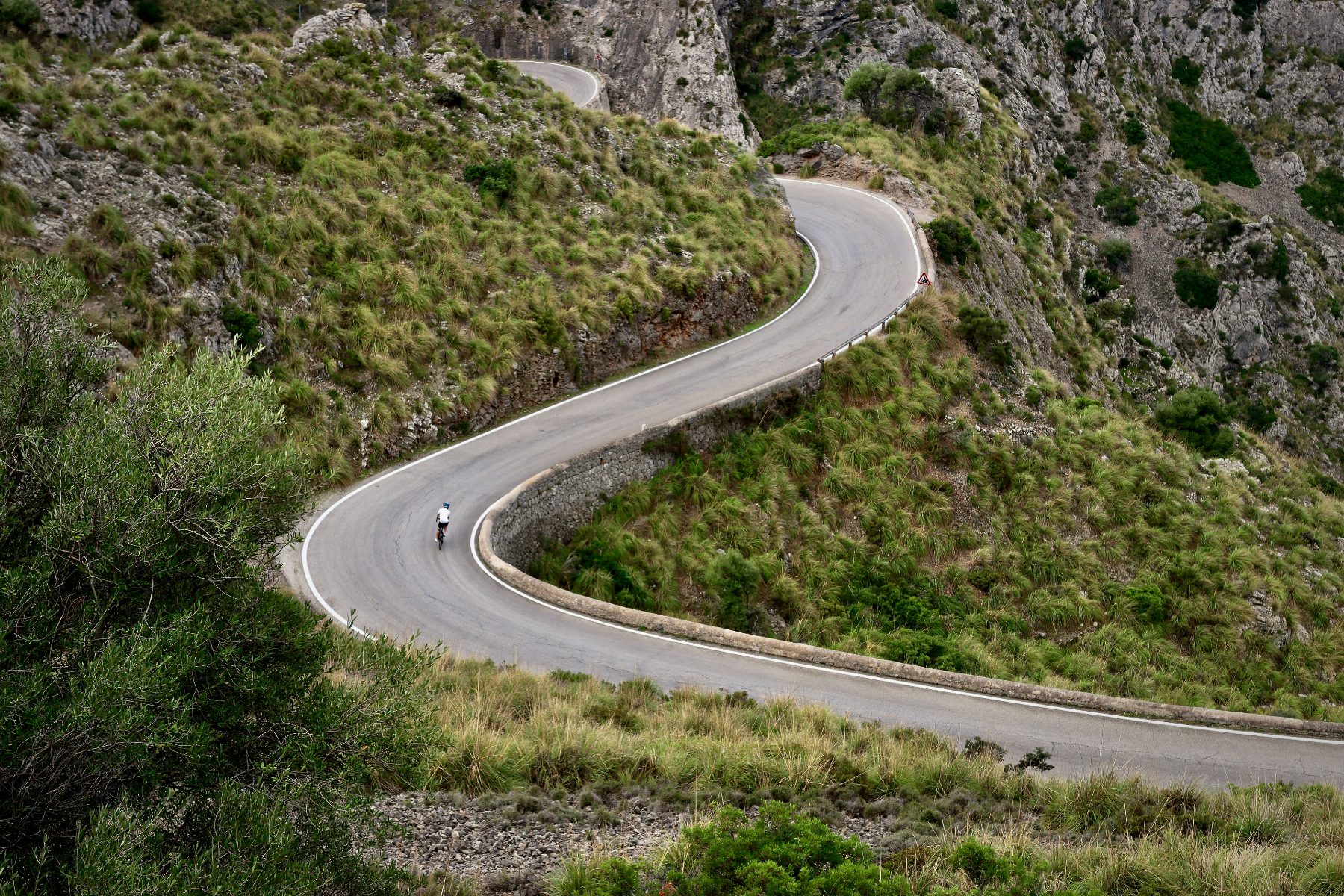
Mallorca is the most popular cycling destination in Europe, and for good reason. In a single week you can ride glassy coastal flats, a genuine mountain range, and one of the most photographed descents in the sport — all from a base you can reach with a budget flight and a bike bag. The riding is that good. The problem is everything that happens before you clip in.
Most people spend more time planning the trip than they'd like to admit. The island has hundreds of viable routes, a dozen credible bases, and an opinion economy of forums, blogs and Strava segments that rarely agree with each other. This guide is the version we wish existed when we started: the decisions that actually matter, in the order you need to make them.
When to go
The Mallorca cycling season runs roughly from March to early November, but the two shoulders — spring and autumn — are where it shines.
- March–May is peak season for a reason. Mild temperatures, green hills, almond blossom early on, and the island geared up for cyclists. It's also the busiest, so book accommodation early.
- June–August is hot. Genuinely hot. Rideable if you start at dawn and treat the afternoon as recovery, but the midday Tramuntana heat is not to be underestimated.
- September–October is the quiet secret: warm sea, thinner crowds, stable weather, and roads that have emptied out after the summer tourists leave.
If you have the flexibility, aim for late April or late September. You get the climate without the crush.
The riding is world-class in any month. The difference between a good trip and a great one is almost entirely planning.
How many days do you actually need?
The honest answer is that you can have a brilliant trip in three days and an exhausting one in seven. It depends on whether you've structured rest into the week or just stacked big days until your legs quit. As a rule of thumb:
- 3 days — a long weekend. Hit the headline rides: the coastal warm-up, one big Tramuntana day, and Formentor at dawn. Lean and memorable.
- 4–5 days — the sweet spot. Enough to ride the classics, recover properly between the queen stages, and still have a day in your pocket for weather or tired legs.
- 7+ days — only worth it if you build in genuine recovery rides. Otherwise day five becomes a grind and you stop enjoying the descents.
This is exactly why every Escape Peloton pack is built around your number of days and your riding level — not a generic itinerary. A 3-day plan leans on the scenic classics and a recovery ride; a 5-day plan goes deeper into the mountains. The structure changes, not just the route list.
Where to base yourself
Your base decides which roads are on your doorstep — and how much of each day you spend transferring versus actually riding. The north of the island, around Port de Pollença and Alcúdia, is the classic choice: flat warm-ups along the bay, immediate access to the Tramuntana, and Formentor more or less out the front door.
Palma and the south suit riders who want a city base, more nightlife and gentler terrain, at the cost of a longer ride to reach the big climbs. Sóller, tucked in the mountains, is for people who want to be in the Tramuntana from the first pedal stroke.
We go deep on this in a dedicated piece — where to base yourself for cycling in Mallorca — comparing the four main options from a rider's point of view.
The rides that earn the flight
You could spend a fortnight here and not run out of good roads. But a handful of rides are the reason people come back year after year. Build your week around these, then fill the gaps with quieter local loops.
The coastal warm-up
Day one should never be a mountain. The flat coastal roads around the Bay of Pollença and Alcúdia are perfect for shaking out travel legs, dialling in a hire bike, and getting a feel for the local traffic and surfaces before you commit to a descent with a thousand-metre drop.
Formentor at dawn
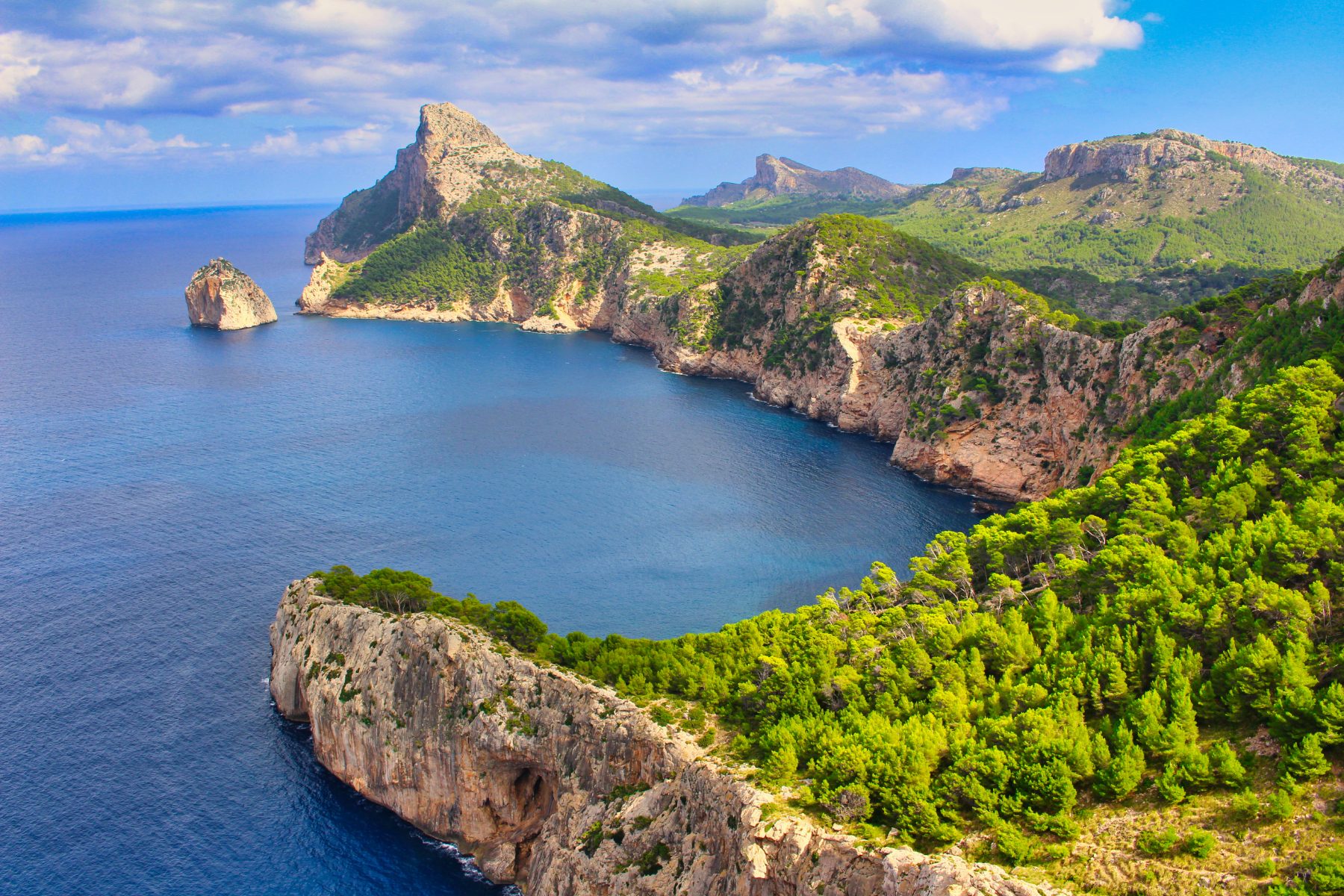
The lighthouse road out to Cap de Formentor is the most beautiful dead-end in European cycling — and a car park by ten o'clock. Ride it early, before the buses, and it's one of the great mornings on a bike. Ride it midday in season and you'll spend it dodging traffic.
Sa Calobra
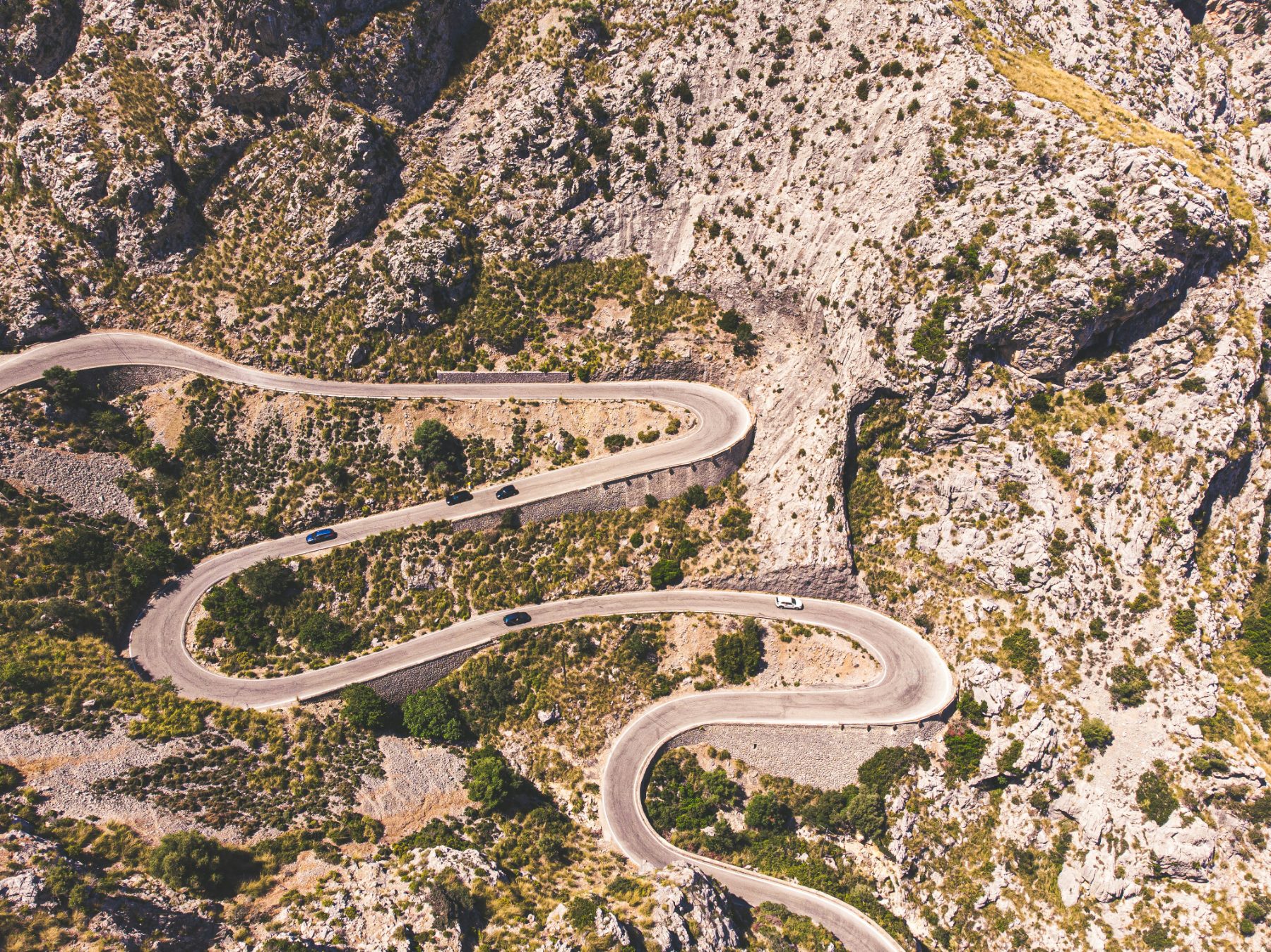
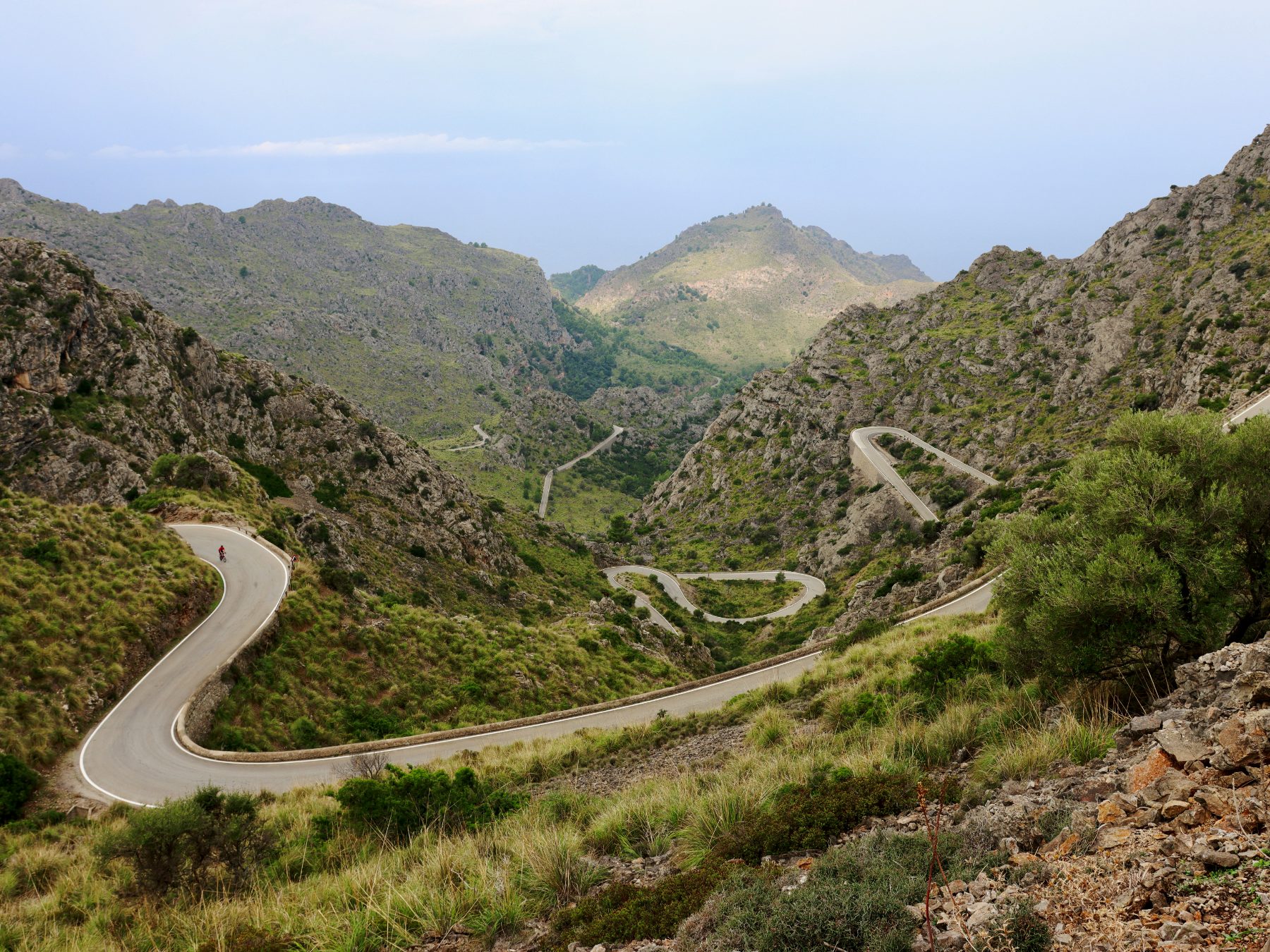
The island's signature climb is really a descent and a climb back out: 26 hairpins dropping to a tiny cove, then the only way home is up. It deserves its own briefing, which is why we wrote one — riding Sa Calobra: what to know before you drop in.
Logistics that quietly make or break the trip
The riding is the easy part. The things that trip people up are the boring ones:
- Bike: bring or hire? Hire is excellent in Mallorca and saves the airline bike-bag lottery, but book early in peak season — the good bikes go first.
- GPX before you fly. Load your routes onto your head unit at home, on wifi, with time to fix problems. Arriving and trying to plan on your phone is how mornings get wasted.
- Café stops are the route. In Mallorca the mid-ride coffee is practically infrastructure. Knowing which ones open early, take cyclists, and have water points changes how far you can go.
- Weather in the mountains differs from the coast. It can be sunny on the bay and wet over the col. Check the Tramuntana forecast, not just the resort one.
Finding routes is easy. Knowing which ones are worth riding, and in what order, is what takes the hours.
The shortcut
Everything above is doable yourself. It just takes time — the kind of time that turns trip planning into a second job of cross-referencing forums and reconciling three different distances for the same climb. That's the entire reason Escape Peloton exists: a curated set of routes, GPX files, café and fuel stops and climb notes, structured around your level and the number of days you have. One download instead of a hundred tabs.
If you're planning a trip to the north of the island, the Mallorca North Pack does this part for you. If you'd rather plan it all yourself, we hope this guide gave you a head start.