Riding Sa Calobra: what to know before you drop in
The most famous climb in Mallorca is a descent first. Here's how to ride the 26 hairpins well — and how to time it so you're not stuck behind a tour bus.
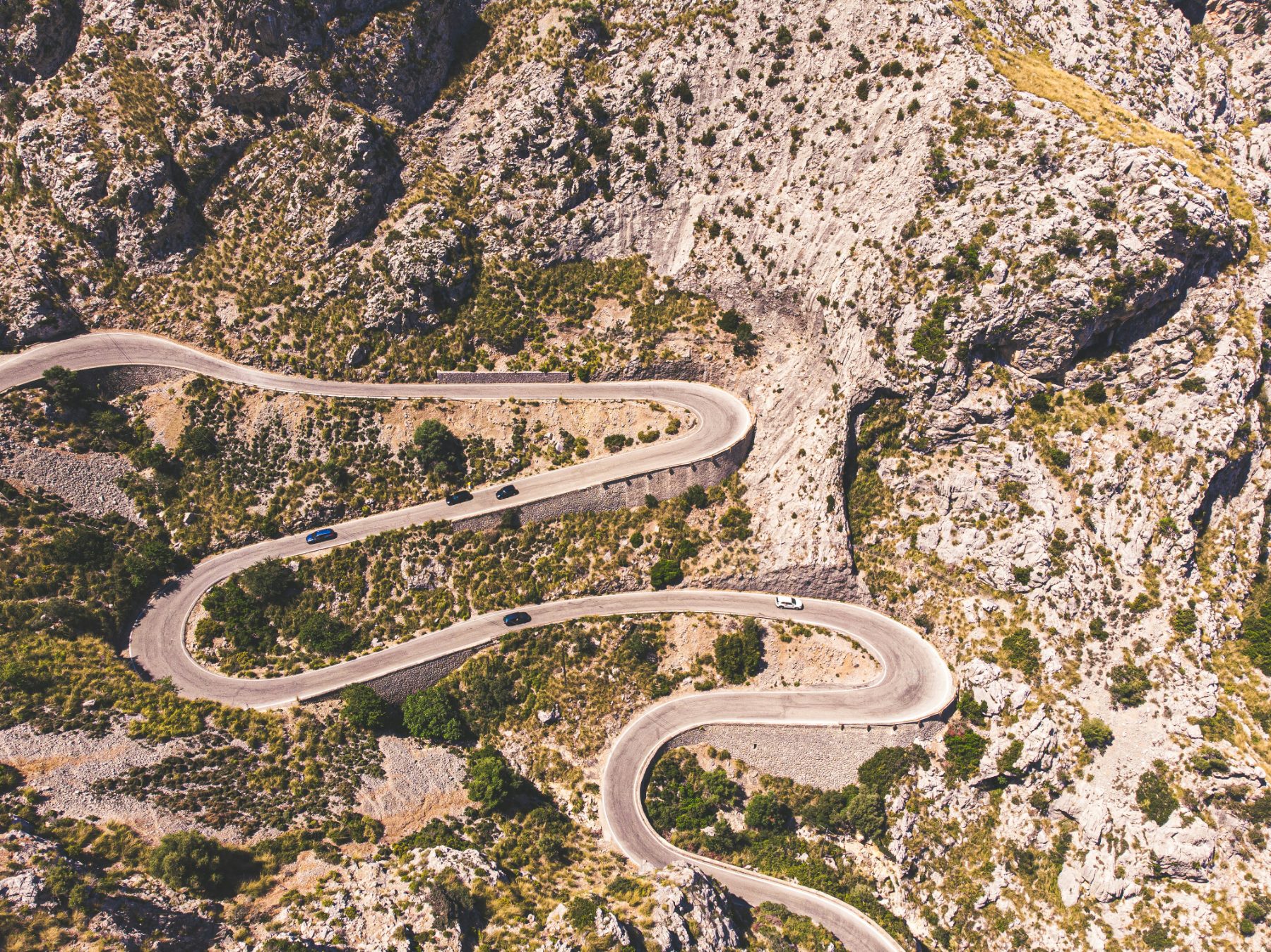
There is no other climb quite like Sa Calobra. Most famous mountains in cycling are a road that goes up and a different road that comes down. Sa Calobra is a single ribbon of tarmac that drops nearly seven hundred metres to a tiny fishing cove — and then, because there is no other way out, you turn around and climb every metre of it back. It is a dead-end you choose to ride into knowing exactly what the price will be.
That structure is what makes it special, and what catches people out. You spend the descent feeling like a hero. Then the road tips up and the bill arrives all at once. This is how to ride it well.
The descent in: enjoy it, but read it
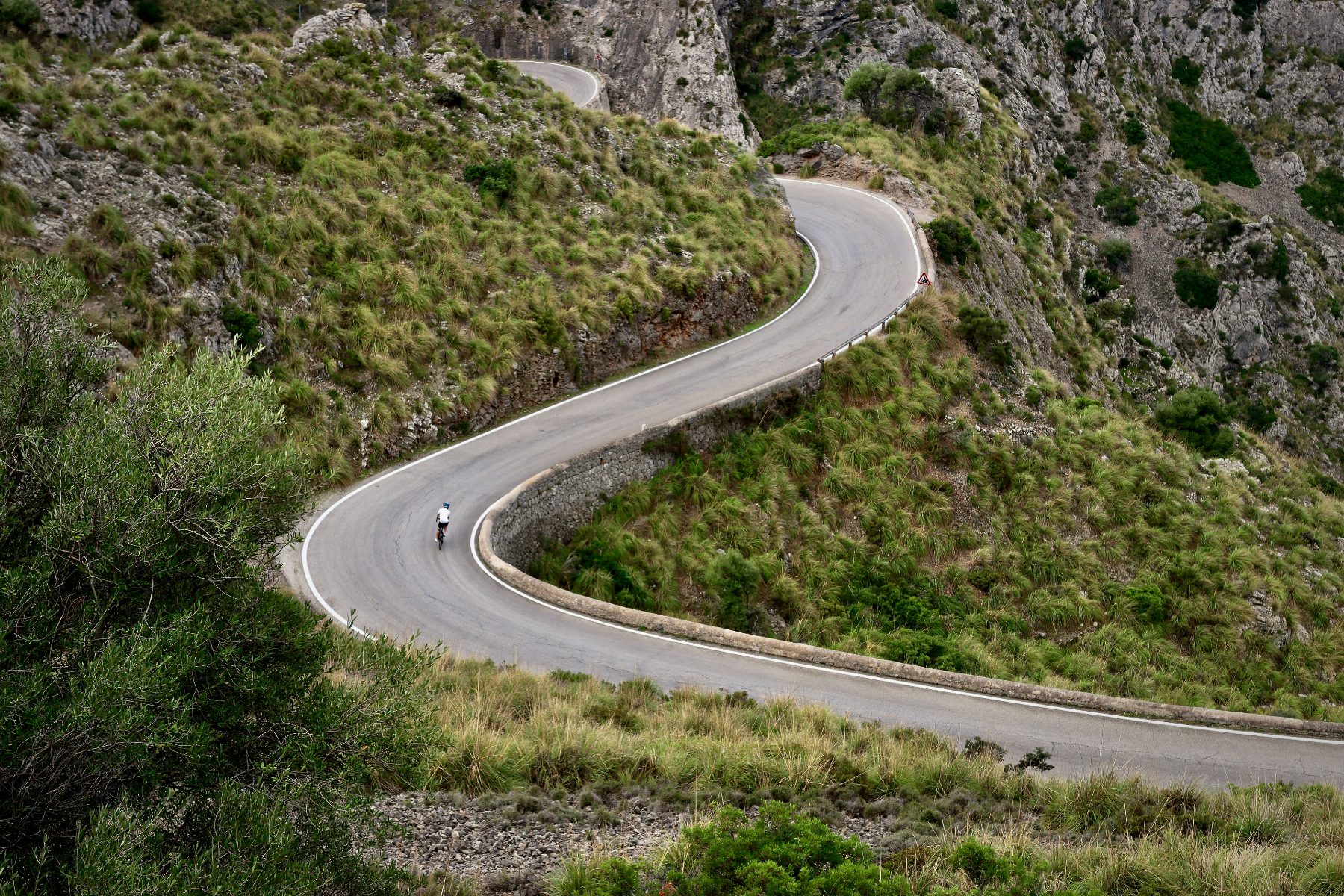
The road down to the cove is sensational and entirely rideable, but it is not a place to switch your brain off. The hairpins are tight, the surface changes in the shade, and you will share the road with hire cars and coaches whose drivers are looking at the scenery, not their mirrors. Descend within yourself. The famous tunnel-and-knot where the road loops under itself — the Nus de Sa Corbata, the "tie knot" — is gorgeous and deserves a photo, not a personal best.
The cove at the bottom has a couple of cafés and a beach, and it gets busy with non-cycling tourists by late morning. Refill your bottles here before the climb — there's nothing on the way up — but don't linger so long your legs go cold.
The climb out: how to pace it
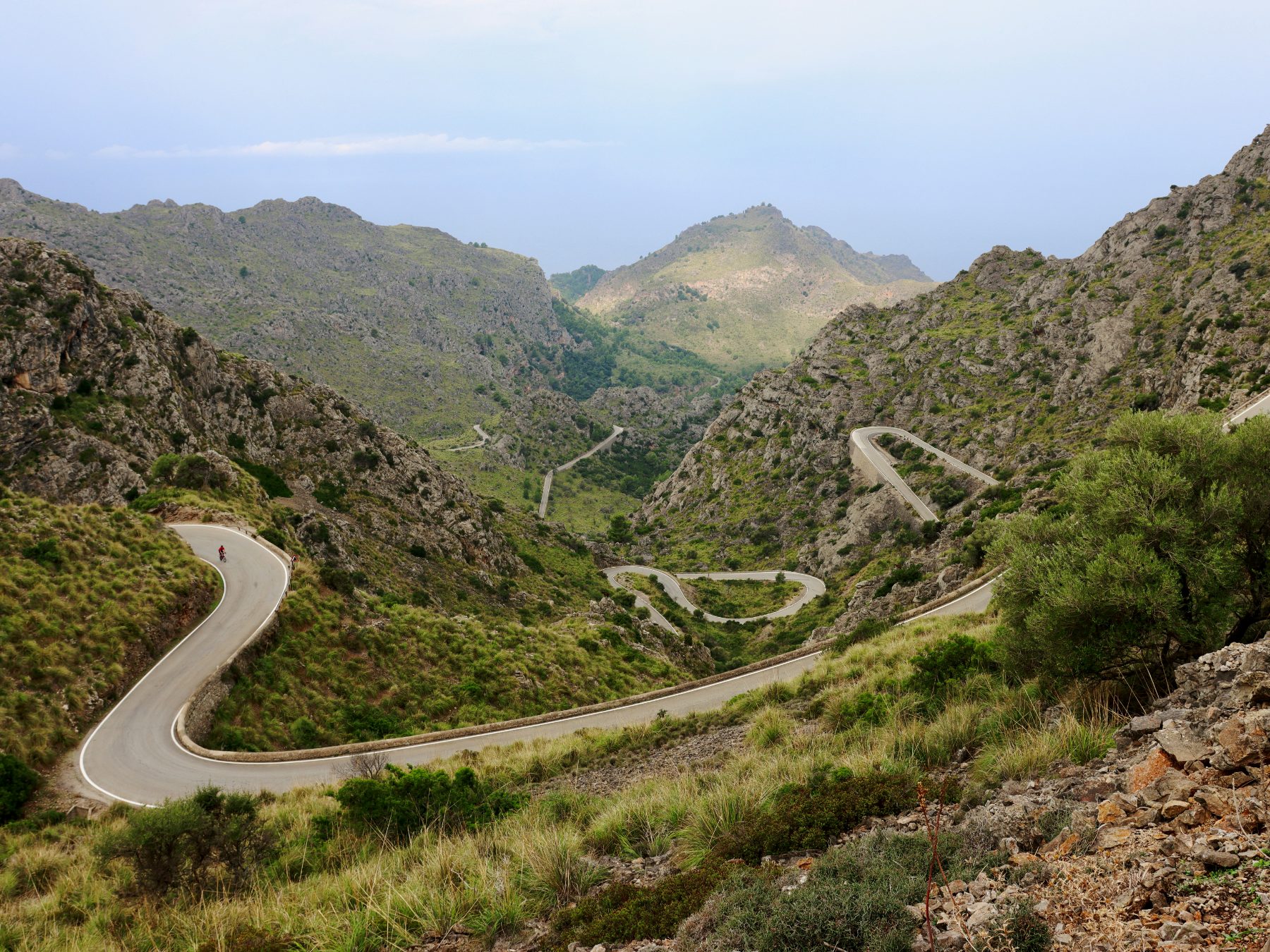
The climb back is famously even. The gradient sits around seven percent for almost the entire length, rarely spiking, rarely relenting. That consistency is a gift if you respect it and a trap if you don't — there's no steep ramp to force you to settle, so it's easy to start too hard on fresh-from-the-cove legs and pay for it in the final kilometres.
- Start two gears easier than you think. Pick a rhythm you could hold for an hour and let the climb come to you.
- Use the hairpins as checkpoints. Twenty-six of them. Tick them off rather than staring at the road disappearing upward.
- Save something for the top third. The final few kilometres are where the even gradient stops feeling friendly. Riders who paced well finish strong; riders who didn't, don't.
It's a climb that rewards patience and quietly punishes ego. Ride the first half like you've got nowhere to be.
Timing is everything
The single biggest factor in whether Sa Calobra is a magical ride or a frustrating one is when you arrive. The road is narrow, popular, and shared with tour coaches that struggle around the same hairpins you do. Get the timing right and you'll have long stretches to yourself. Get it wrong and you'll spend the descent on the brakes behind a bus.
- Go early. Be starting your descent in by mid-morning at the latest. The coaches build through the day and peak around midday.
- Avoid the middle of the day in peak season. If you can't get there early, it's often better to ride it as a late-afternoon effort once the tour traffic thins.
- Mind the closures. The road has been subject to seasonal and time-of-day restrictions in recent years. Always check current access before you build your day around it.
Where it fits in your week
Sa Calobra is a centrepiece, not a warm-up. It works best as the climax of a bigger Tramuntana day — often paired with the climb up to the Coll dels Reis from the other side — or as a focused out-and-back when you want one big effort rather than a long day in the saddle. What it shouldn't be is day one on travel legs, or the morning after your hardest ride.
If you're sketching out how the whole trip slots together, our complete guide to planning a cycling trip to Mallorca covers how to order your rides so the queen stages land on the right days.
In the Mallorca North Pack, Sa Calobra comes with a clean one-pager: the climb profile, the hairpin count, where the water is, the café at the bottom, and the honest note on timing. The GPX is tested for Garmin, Wahoo, Komoot and Strava — load it before you fly and just ride.